Physical Address
304 North Cardinal St.
Dorchester Center, MA 02124
Physical Address
304 North Cardinal St.
Dorchester Center, MA 02124


When something goes wrong at home, it never happens neatly. A burst pipe at 2am. A power cut during dinner. A family illness when you’re already stretched thin. Moments like these aren’t dramatic — they’re disruptive — and the stress comes from not having what you need, when you need it.
A Home Emergency Binder changes that.
It pulls your essential information into one place, acts as your household command centre, and gives you calm, fast access when life suddenly becomes inconvenient or overwhelming.
This guide walks you through how to build a home emergency binder that actually works — practical, easy to maintain, and ready for real-life UK emergencies.
Emergencies come in all levels of inconvenience:
power cuts, boiler failures, storms, medical issues, water leaks, evacuation warnings, broadband outages, even something as simple as a lost insurance document.
Most situations aren’t catastrophic — they’re chaotic.
And chaos is what drains your energy.
A Home Emergency Binder restores order quickly. It gives you:
Unlike a go-bag (supplies) or a kit (gear), a binder is information — the thing that stops you from scrambling.
Preparedness isn’t dramatic — it’s practical. It protects your household’s stability when daily life hits pause.
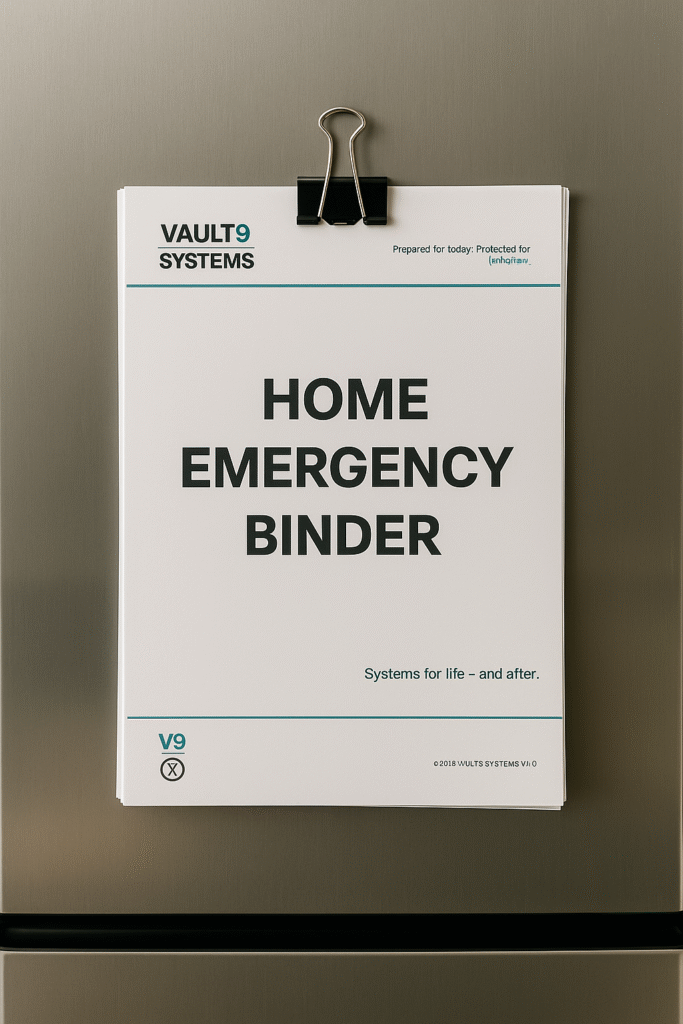
Your binder should be clear, structured, and easy to navigate.
These are the core sections every UK home should include:
This becomes essential during medical events, school incidents, or police/ambulance calls.
Keep copies (or locations) of:
This section dramatically speeds up claims, identification, and admin tasks when something goes wrong.
This becomes priceless during power cuts, boiler issues, leaks, or outages.
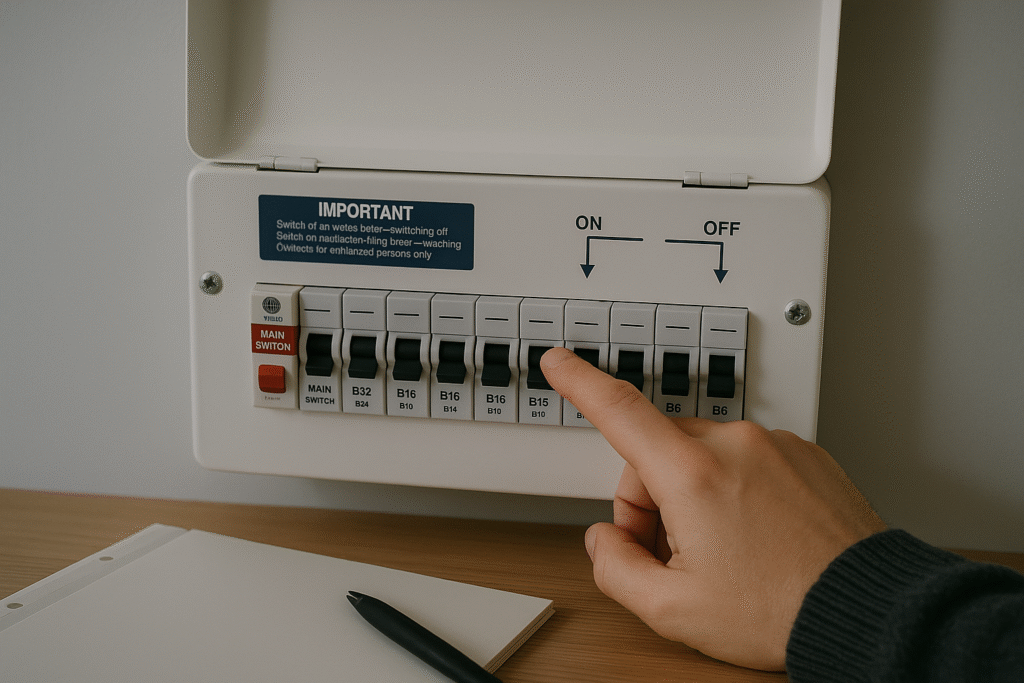
Including:
Clear instructions reduce panic when you’re acting under pressure.
This section is essential for paramedics and urgent care situations.
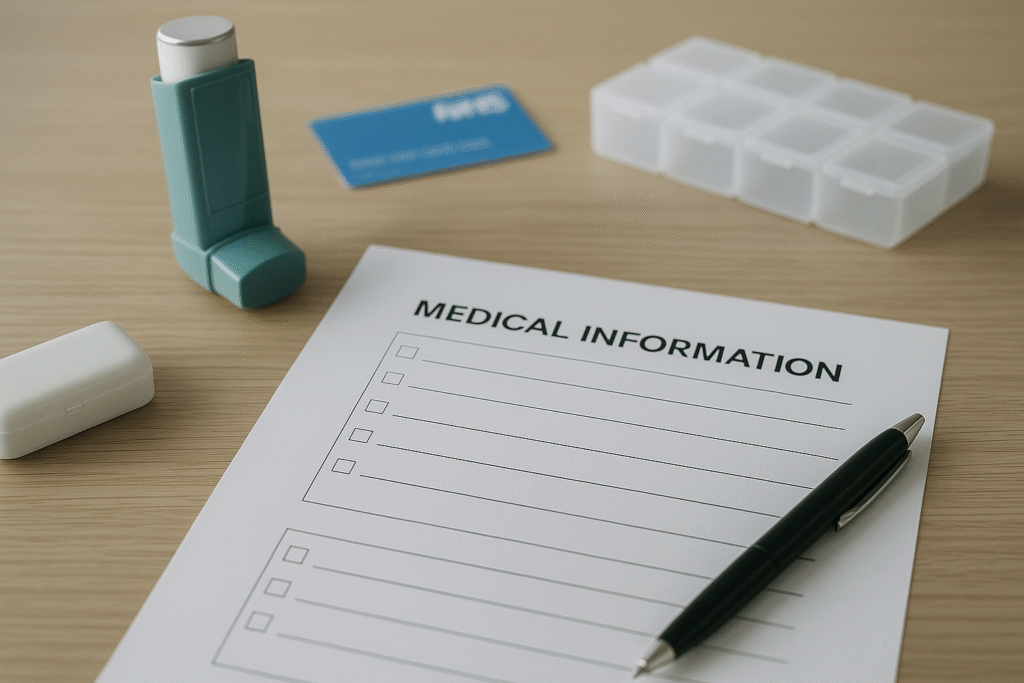
This prevents digital lockouts during stress, loss, or emergencies.
A binder evolves with your household — leave room for updates.
A physical binder is non-negotiable.
Power and phones fail. Paper doesn’t.
Use:
Most homes already have:
They’re just scattered.
Pull everything into one pile before sorting. This immediately reduces clutter and stress.
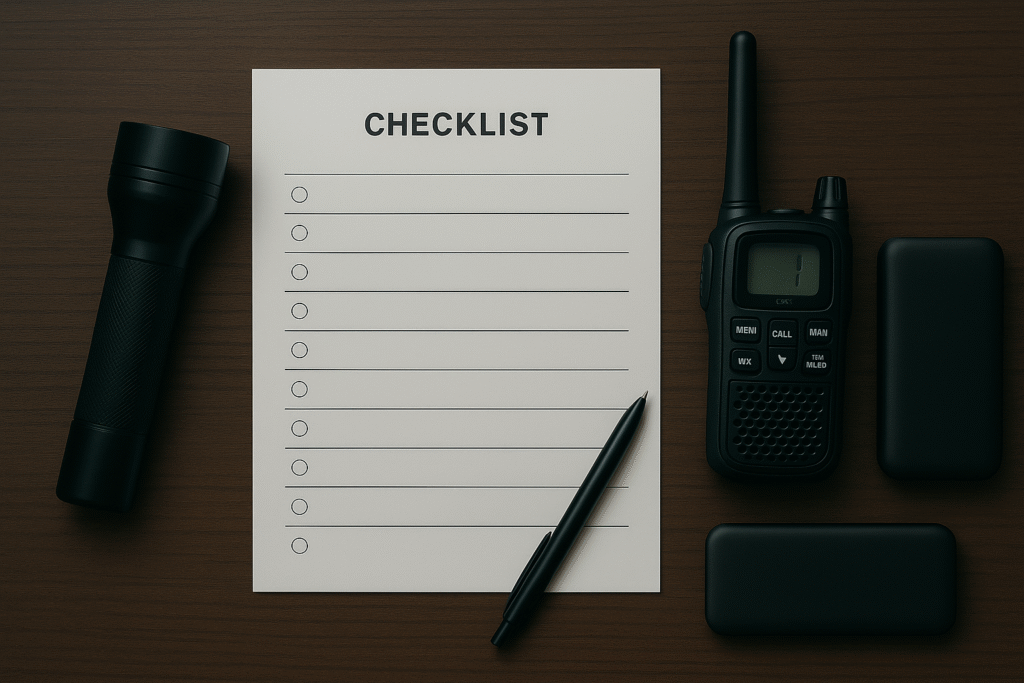
Use a checklist (or a pre-made binder like VAULT9’s) to identify what’s missing:
The goal is completeness — not perfection.
Keep it:
Ideal spots: hallway cupboard, kitchen cabinet, or home office shelf.
Your binder loses value if it goes stale.
Review every 6–12 months and update:
Small, regular updates keep the system trustworthy.
Mistake
Fix
Creating it once, then forgetting it exists
Add review dates to your calendar.
Overfilling it with unnecessary papers
Only include essential, actionable information.
Storing it out of reach
Keep it in a visible, predictable location.
Relying only on digital versions
Always print a physical copy.
Not involving the family
Show them where it is and how it works.
A binder only works if people can find it — and use it — under stress.
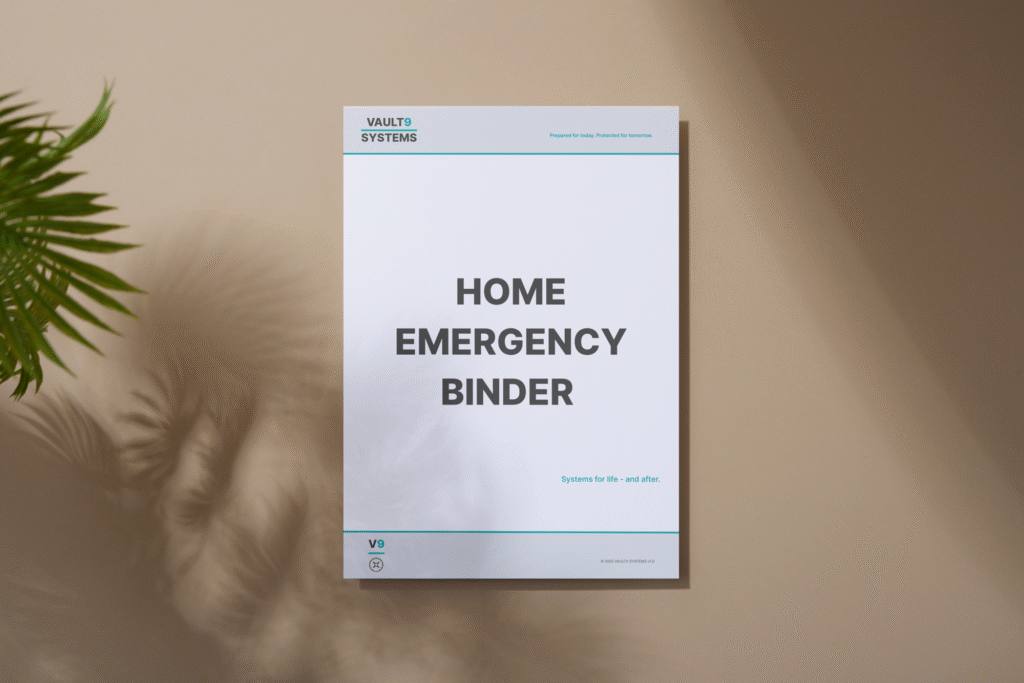
If you prefer to skip the setup and start with a structure that’s already done, the VAULT9 Home Emergency Binder gives you the full system:
📘 Download the VAULT9 Home Emergency Binder
Your ready-made household command file — designed for real UK emergencies.
A complete system gives you confidence, structure, and rapid access when time matters.
Good systems do the heavy lifting for you.
VAULT9 products are built to:
Clarity and calm aren’t accidents — they’re by design.
Start small:
Within days, you’ll feel noticeably more in control.
Preparedness isn’t fear — it’s confidence backed by structure.
A Home Emergency Binder gives your household a calm anchor when things feel chaotic.
It keeps essential information in one place, supports faster decisions, and strengthens your household’s resilience.
Preparedness is practical peace of mind — and it starts with one binder.